
Back to Hailsham
Folio Book Illustration Award
The Folio Society
2026
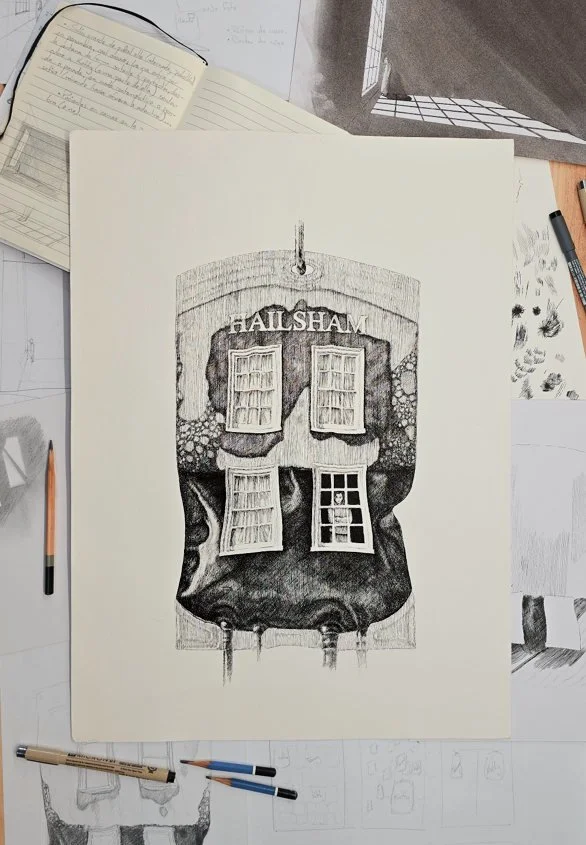
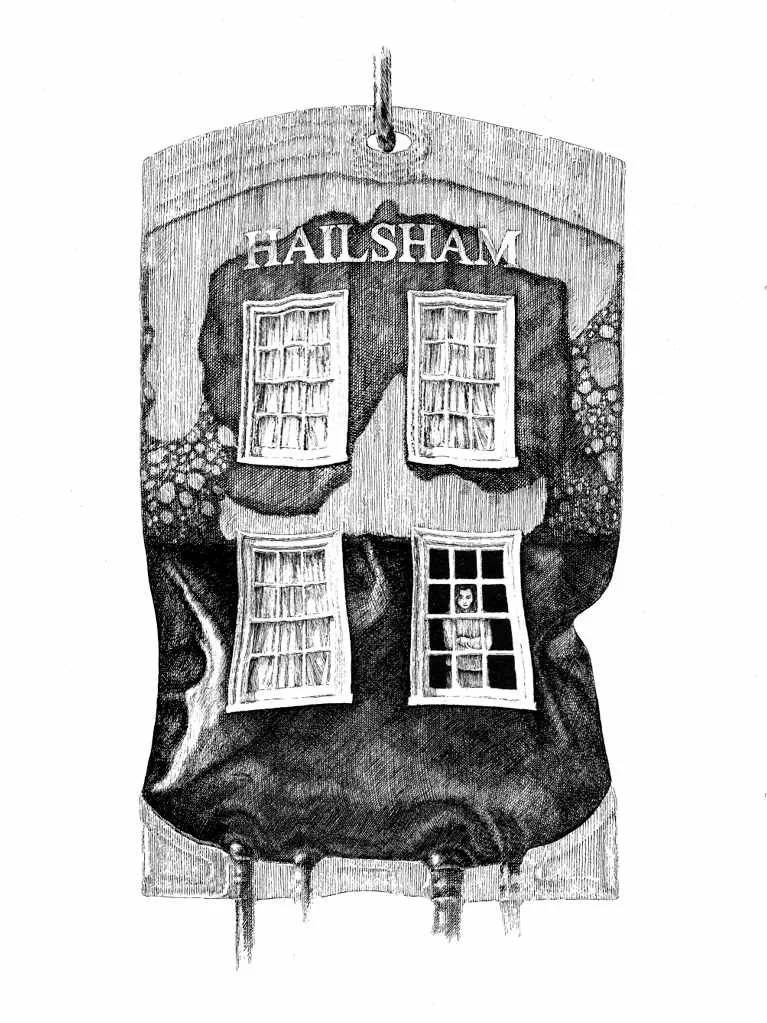
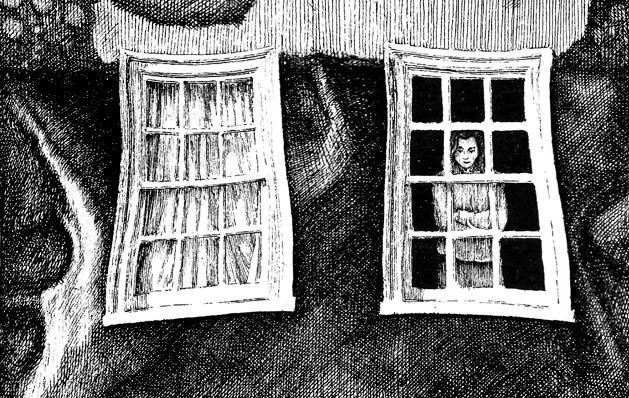
Illustration created for The Folio Society’s annual call for submissions, dedicated this year to depicting the first chapter of Kazuo Ishiguro’s Never Let Me Go. The novel centers on Kathy H., who recalls her life at Hailsham and the bonds she shared with Ruth and Tommy within a system that had already determined her fate. In this opening chapter, the protagonist—now a caregiver for donors—begins to come to terms with a past she had tried to distance herself from, prompted by a patient interested in hearing stories about Hailsham. This theme of memory and the reappearance of the past forms the conceptual core of the illustration Back to Hailsham, inspired by passages such as: “… I started seeking out for my donors people from the past, and whenever I could, people from Hailsham.”
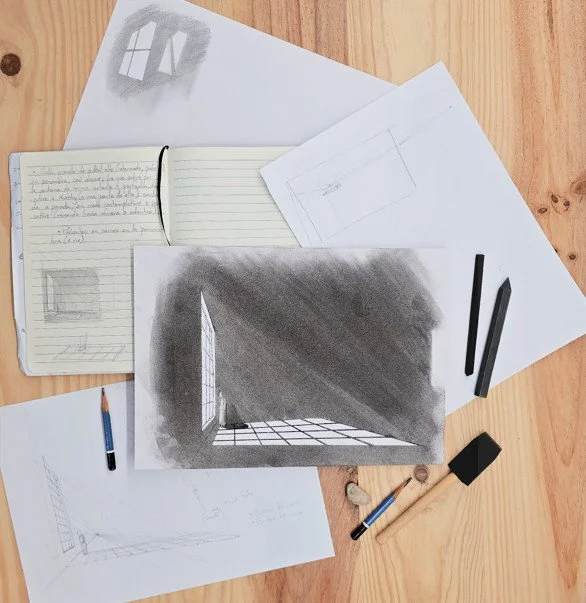
The first idea responds literally to what is recounted in the novel’s first chapter. The sketch depicts a contemplative female figure standing before a window, surrounded by a dark and ambiguous space that can be interpreted as either Hailsham or the recovery rooms where Kathy cares for the donors. For this initial phase, I experimented with charcoal, masking the areas of light with adhesive tape and erasing the highlights from the figure with an eraser, emphasizing the contrast between the harsh light streaming through the window and the dark mass of the environment with no defined boundaries.
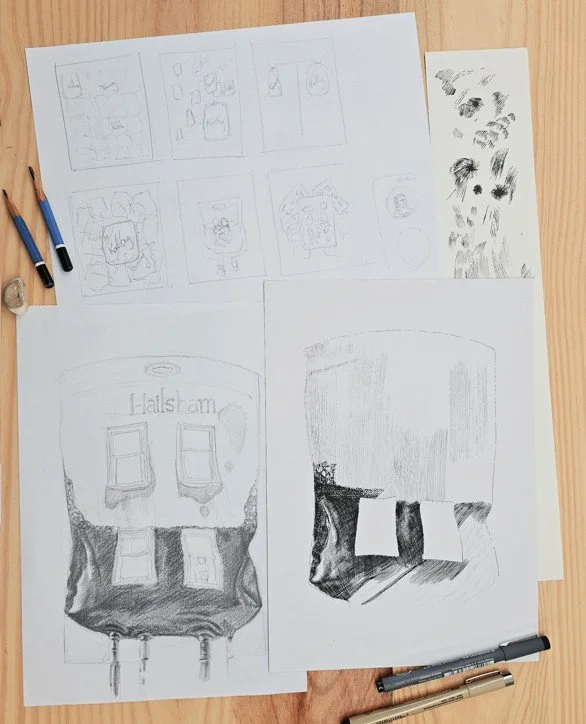
The conceptual development continued with a second line of visual exploration. Drawing on elements typical of hospitals—pills, beds, IV bags, and bags of donated blood—analogies emerged linking these objects to the characters: figures conceived as strips of pills bearing their printed information, or as numbered bags intended for use. This metaphorical interpretation led to a second idea in which institutions like Hailsham function as vast donation repositories: places that prepare and preserve lives destined for a purpose imposed from birth. Even so, within that deterministic fate, the characters retain a free inner life, made up of memories and bonds, which gives meaning to their existence.
The entire process is illustrated through the preparatory sketches, which show the evolution of the ideas and how they shaped the choice of materials. The final technique—pen and ink—was chosen for its testimonial quality, which reinforces the concept’s intimate and documentary dimension.
The images on display include the preliminary studies and compositional variations that guided the creation of the final work, as part of the project’s development.